
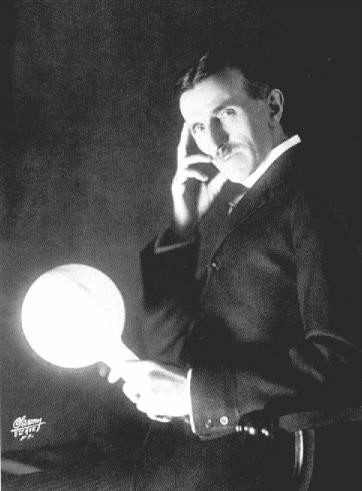
 SciFi Question of the Day: What tech do we need in order to power electronic devices remotely… transmitting power without batteries or plugging into a socket? Could Tesla actually do this a century ago?

Facebook Answers:
 Douglas S Caprette The problem with transmitting power with a Tesla coil is the inverse square law. The power drops off with the square of the distance. This is because the transmission is omnidirectional.
To efficiently transmit power you need a tightly focused beam like a laser or maser. And objects passing thorugh the beam would interrupt the transmission.
That’s with current technology.
If you want an SF technology I would suggest sending two tightly focused beams. One neutrinos,the other antineutrinos. They easily pass through solid matter. You could send a beam of neutrinos right through the Earth and hardly lose any. Then at the receiving end the two beams would be combined. The particles would anihilate each other, producing photons that could be converted to electricity.
If you decide to use a neutrino/antineutrino powere transmission system, feel free to name it after me.
 AmyBeth Fredricksen Will do, Douglas,will do!
Douglas S Caprette I checked on this and instead of producing photons, which is what you get when an electron is anihilated by a positron, you get charged leptons. But probably you don’t want to get into too much detail anyhow.
Google Plus Answers:
 Erik Swiger – Just a thought – know how a crystal radio works? We’re living in a sea of radio waves. Use an antenna and a diode to convert the radio signals to electricity to charge batteries. Problem is it needs a big antenna.
 Laston Kirkland – yes he could… http://en.wikipedia.org/wiki/Wireless_energy_transfer
The way Tesla did it was a rapidly oscillating magnetic field
Laston Kirkland – the vibration of a crystal in a radio does very little work, and would do very little to charge a battery. It would be like trying to convince a mouse to pull a horseplow. even in a sea of radio waves, the best you would get would be two or three mice.
Laston Kirkland – the real problems with wireless power transmission were twofold. 1) it plays absolute havoc with radio waves up and down the spectrum. and 2) how do you charge for it? The former is a engineering issue, the latter not so much.
 Brent Stires – They’ve been doing it with copper and it’s resonance frequency for awhile now.
Erik Swiger – +Brent Stires More info please?
Brent Stires – http://www.ted.com/talks/eric_giler_demos_wireless_electricity.html http://mashable.com/2011/10/20/powermat-wireless-charging-tech/
Brent Stires – The TED talk is from 2009. And he’s talking about the experiment done 2 years before.
Erik Swiger – Super! Thanks +Brent Stires .
Brent Stires – Welcome to the future
Erik Swiger – What I’m seeing from these links is basically charging stations; that is, the device is placed near the transmitter to charge a battery wirelessly. We already have that technology.
How are they going to send adequate amounts of power miles away from the distribution point?
Brent Stires – There needs to be an adequate reason to do so
Erik Swiger – I thought that was the point of the original post: to power devices without wires or batteries. In other words, transmitted power. Not to charge batteries in a charger, but to eliminate the need for batteries altogether.
Brent Stires – the TV in the TED talk was truly wireless.
The phone would’ve been if the receiver was hooked up to the actual phone and not the battery.
At the moment the only way to get power out is by having giant coils.
But free power isn’t something this country would like due to it being a subsidiary of capitalism.
Laston Kirkland – A science fiction idea I had was a fortified monastery… something like Anathem by Stephenson… where the monks had solved the radio interference issues, and were outputting free power to the world…. and big business and government were trying HARD to stop them.
Laston Kirkland – also, reread my original posts, and I didn’t mean to shut you down+Erik Swiger I had the same crystal radio idea myself years ago… a local radio station had the tagline “10,000 watts of power, and no idea what we are doing” and I researched the idea of getting power that way… turns out not so much.
Erik Swiger – I’d still like to play around with this someday, when I have a little time and money to do so. Given a large antenna array (and I do mean large), it should be possible to gather enough radio waves to charge batteries, to run some small household appliances. It’s not like I’m going to be running major energy-sucking appliances like a dryer or an oven, but it should be sufficient to run some lights and electronics.
By the way, +Laston Kirkland , I would imagine the powers-that-be could wipe out your monastery with an EM pulse. That’s the downfall of any electronic system, as I think we’ll see in the next few years.
Laston Kirkland – heh, I thought of the EM pulse as well… and shortly after that the monks escape with their biomodified yeast that makes gasoline from garbage.
 Thomas Sanjurjo – I asked my father (CEO of an energy company) about this one, here is his response, “It’s a great idea, but the problem isn’t the output. You could put a tesla, or something similar, up and charge car batteries, but the problem is in the receiving end. You’d only be able to receive a portion of the energy sent out, so it’d still take an incredibly long time to charge. You wouldn’t be able to use the energy directly because of the loss. Same problem you have with long distance transmission on current lines, just even bigger because of the medium being designed to use resistance rather than eliminate it.”
Laston Kirkland – yup… farther away from source you are the more power is lost just getting it to you… If there WAS a way to store power IN the medium (air or earth) and retrieve it on demand… so all you needed to do was feed power into it, and later, tap it when needed it… so the atmosphere itself stored energy in some way….
something using ELF waves, or magnetic resonance, or I dunno, eldritch runes.
well…. that’s the science fiction idea I’m working on.
 I would love to hear what you think! Even if you are reading this post a year or more after publishing, I hope you will leave a comment with your own ideas on this topic.
The previous SciFi Q of the Day is From the Ocean to Space
The shortlink for this post is http://wp.me/p1qnT4-GY
The next SciFi Q of the Day will be up next Tuesday.

 3. What has been your educational path so far, and how far to you plan to go?
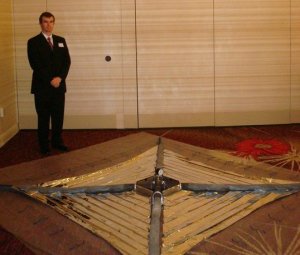 4. What will you be doing at the NASA Robotics Academy at Marshall?
 7. Do you identify as a geek or a nerd?
 9. Have you ever used the line “Yes, I am a rocket scientist…” to impress a date?
 12. Why are there no lightsabers in the Orion’s Arm Universe?
 15. What kind of soft science is in your novella?
 19. What is your dream job?


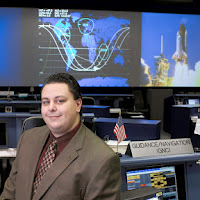


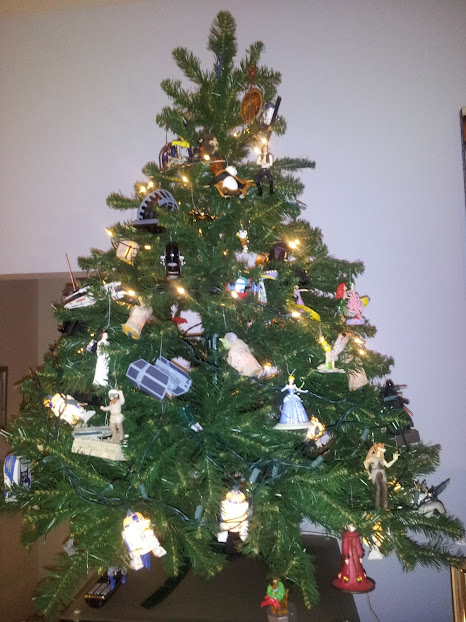 14) Do you self-identify as a geek or a nerd? But you still found a woman willing to marry you? 🙂


 Last weekend, something very special arrived in the mail.


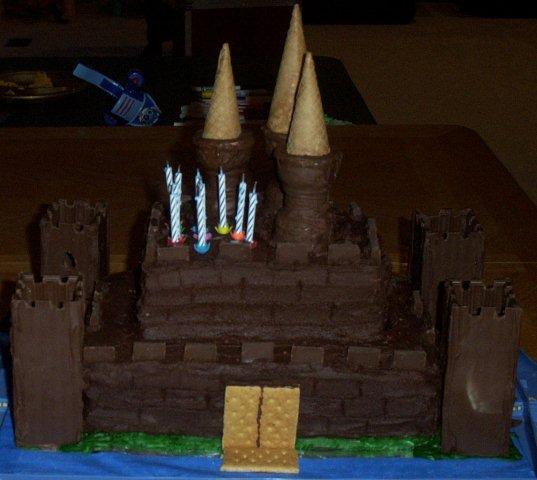
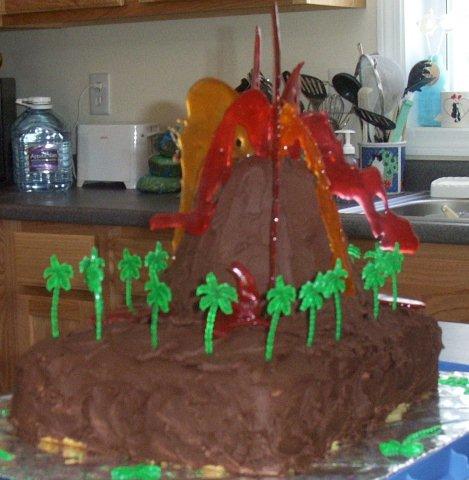 9. What’s the most creative cake you’ve ever decorated?
 10. Some of your novels are labeled “erotic romance” and others “sexy women’s fiction.” Do you have rules for how sensual you write the sex scenes when you’re writing one or the other?






 AmyBeth Inverness
Drama Queens
And sometimes I get so into my characters that I start feeling for them… often more than I really should. 😛 I have a terrible time killing off a character. It rarely happens in my stories. Conflict is difficult for me. I want everyone to be happy, even if they’re fictional lol!
Today I was thinking about those women who are labeled over-dramatic. The swooners. The shouters. The ones who always seem to have a larger-than-life dose of drama.
But are these real women really like that? Well, I’ve known quite a few. A high school friend who would become extremely depressed over any little thing. Looking back, I believe she had clinical depression or some other mental illness, and I don’t think she was getting the help she needed. When I was a Resident Director at a local college, there were several teenagers (18 might make you an adult, but you’re still a teenager) who would take any small setback and turn it into a mega-disaster. This was simple immaturity.
Are there characters like that? Sure. There’s a common theme in fiction (and perhaps in life) that the typical guy starts to mess up his relationship with his wife or girlfriend, and she tries talking to him, or letting him know in various non-dramatic ways that she’s unhappy, but he doesn’t listen until she actually breaks up with him, or she throws a huge fit.
OK, back to real life. Yes, this does happen. The sad thing is, these women often end up labeled “drama queen” or worse. But what happened all those times she spoke softly and politely about her concerns? How many times was she ignored? If she tried hundreds of times to make her needs known in a calm, mature manner and it had no effect, then it’s not right to label her a drama queen if once out of those hundreds of times she ended up losing her composure and causing a scene.
Although complicated characters make good fiction, no character is ever as complicated as a real woman. In a story, a writer might say “The frustration of having gone unheard for so many years finally built up into something she couldn’t control.” In reality, a woman on the edge probably has a cauldron of causes leading up to the big moment. Frustration. Hormones. The little things that shouldn’t matter but do; those hot buttons we all have that other people just don’t understand. It’s more than a writer could or should put into a work of fiction.
So tell me…
1) Do you know real women who are labeled drama queens when they really didn’t deserve the label?
2) As a writer, how do you make your audience understand the difference between a character who is an immature, rightfully-labeled drama queen and a character who goes over the edge only when pushed too far?